Sell Your Vintage Sports Pennants to Jons Stats in San Antonio
Jons Stats purchases individual pennants and entire collections from local sellers who have inherited or decided to downsize their sports memorabilia.
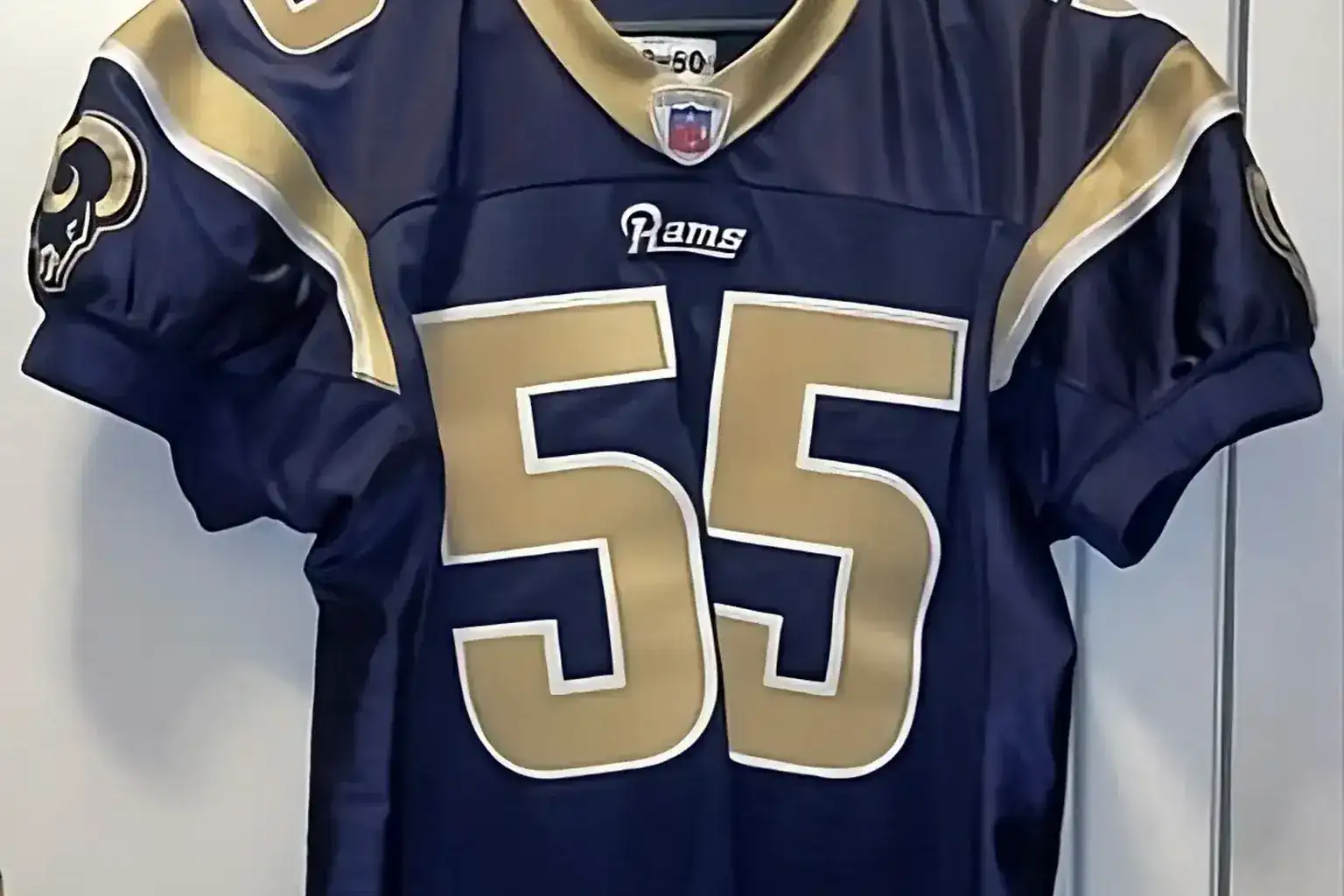
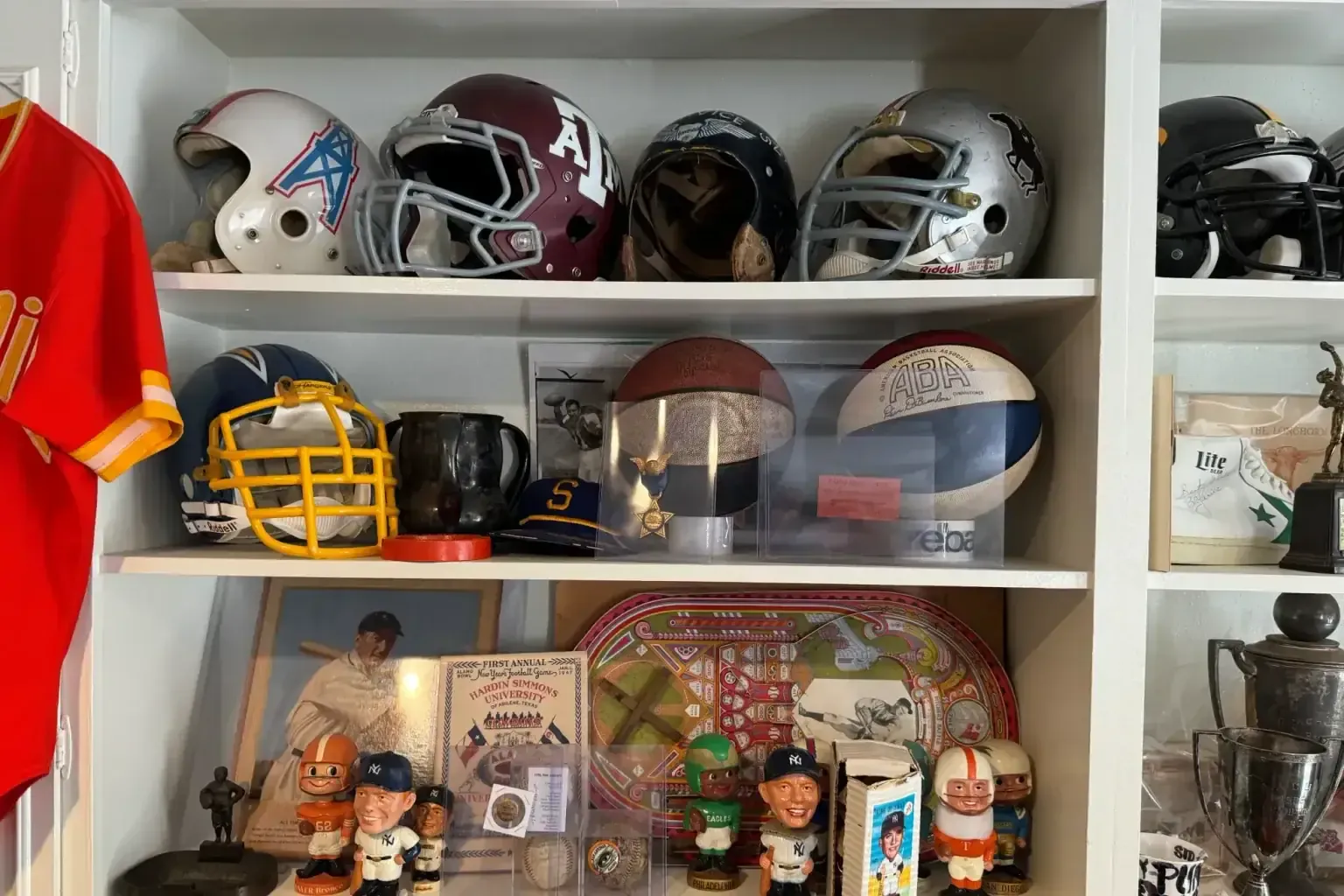
Jons Stats buys vintage sports pennants and vintage sports programs from collectors and estate liquidators across San Antonio, TX. Whether you have a felt pennant in original packaging, a framed pennant display, or a stack of game-day programs from decades past, we handle the evaluation, offer, and payout without auction fees or waiting months for a buyer. Send photos or bring items in person, receive a fair offer based on condition and rarity, and walk away with payment when you accept.
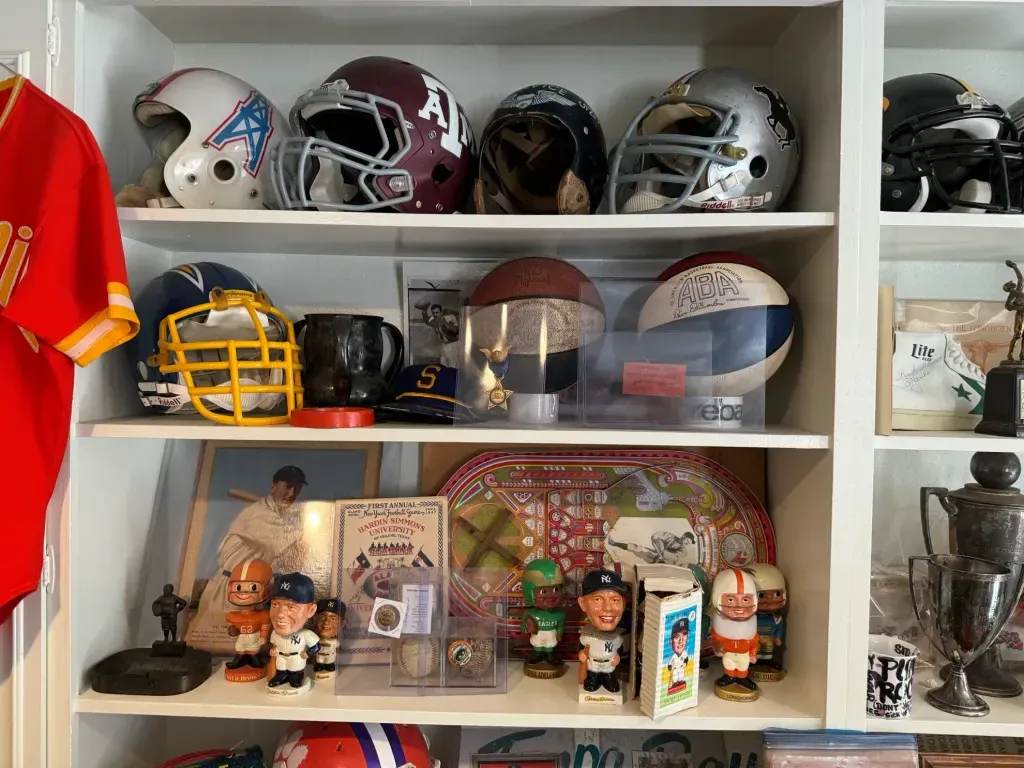
Jons Stats purchases individual pennants and entire collections from local sellers who have inherited or decided to downsize their sports memorabilia. We buy felt pennant stock from defunct franchises, framed pennant displays in original glass, and paper ephemera from game attendance—programs, rosters, and event guides that capture a specific date in baseball pennant history or football team pennants from leagues no longer in existence.
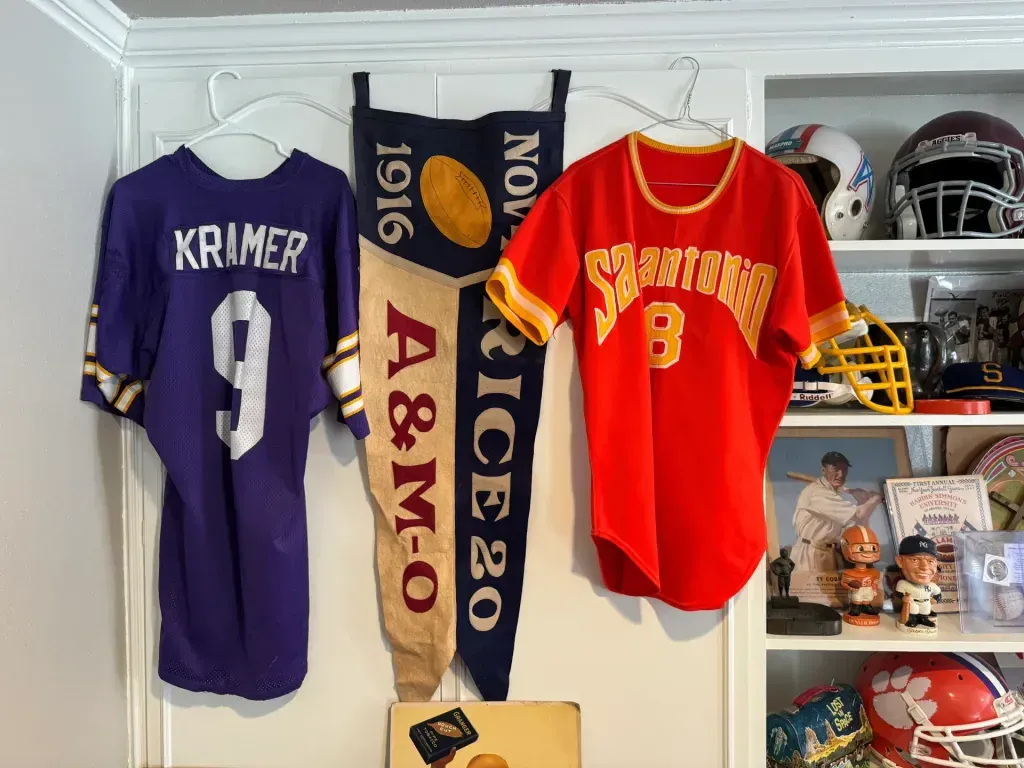
We purchase MLB baseball pennant stock from teams that still exist and from franchises that relocated or folded decades ago. World Series commemorative pennants tied to a single championship year command higher prices than standard team-issue felt sports memorabilia, especially if the year marks a historic moment—a first title, a drought-breaking win, or a legendary player's final season.
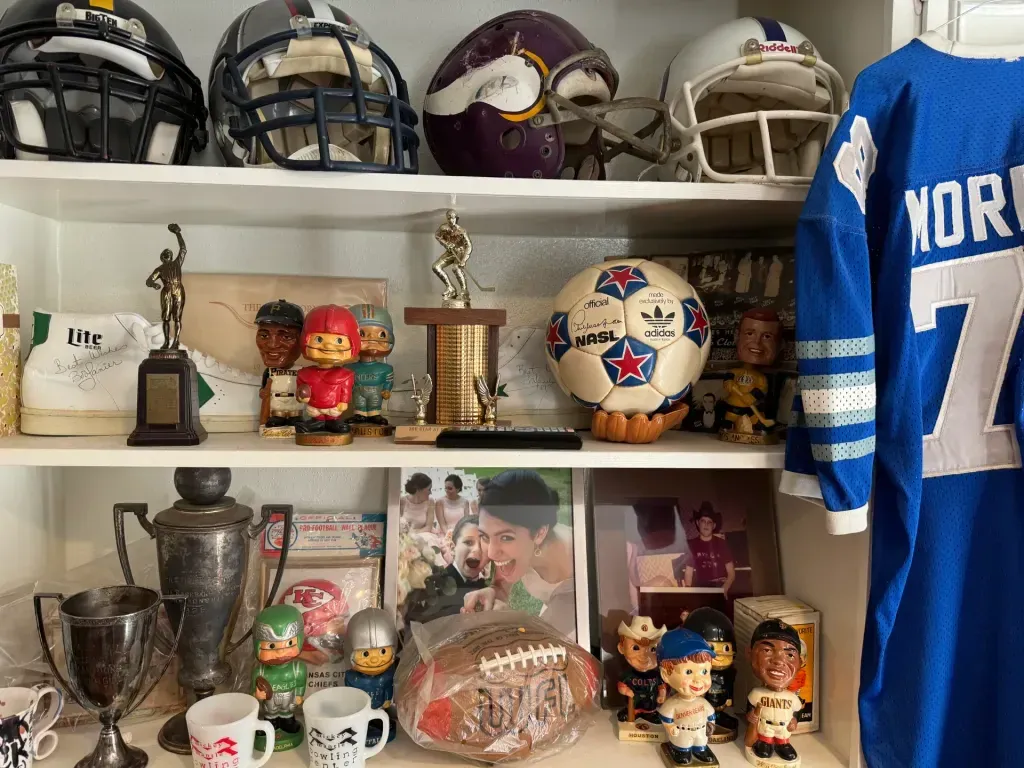
ABA basketball pennants remain sought-after by collectors of 1970s sports memorabilia, especially all-star game pennant issues and championship-season stock. Negro leagues pennants and memorabilia are actively purchased at competitive rates; these pieces carry both historical weight and legitimate scarcity, since far fewer survived than pennants from contemporary Major League franchises.
Condition for vintage pennants is judged on a four-tier scale: mint, excellent, good, and worn. Mint describes an unused deadstock pennant with original fold lines but zero display wear, no fading, unfrayed felt edges, and all stitching intact. Excellent indicates a pennant displayed carefully; light color fade may be present on one side, edges show minimal fraying, and the flag hangs straight with no permanent creases or pinholes. Good condition allows moderate fading, minor edge fraying, and light handling marks; collectible value remains solid but reduced from excellent or mint. Worn pennants display heavy fading, edge damage, pinholes from pushpin mounting, or stains; these still sell but at a fraction of mint pricing.
College and university pennant demand peaks for stock tied to specific championship seasons, notable athletes, or programs that have since relocated or dissolved. A pennant from a 1950s-era college football team now defunct carries more collectible value than a generic school-name pennant issued in recent decades.
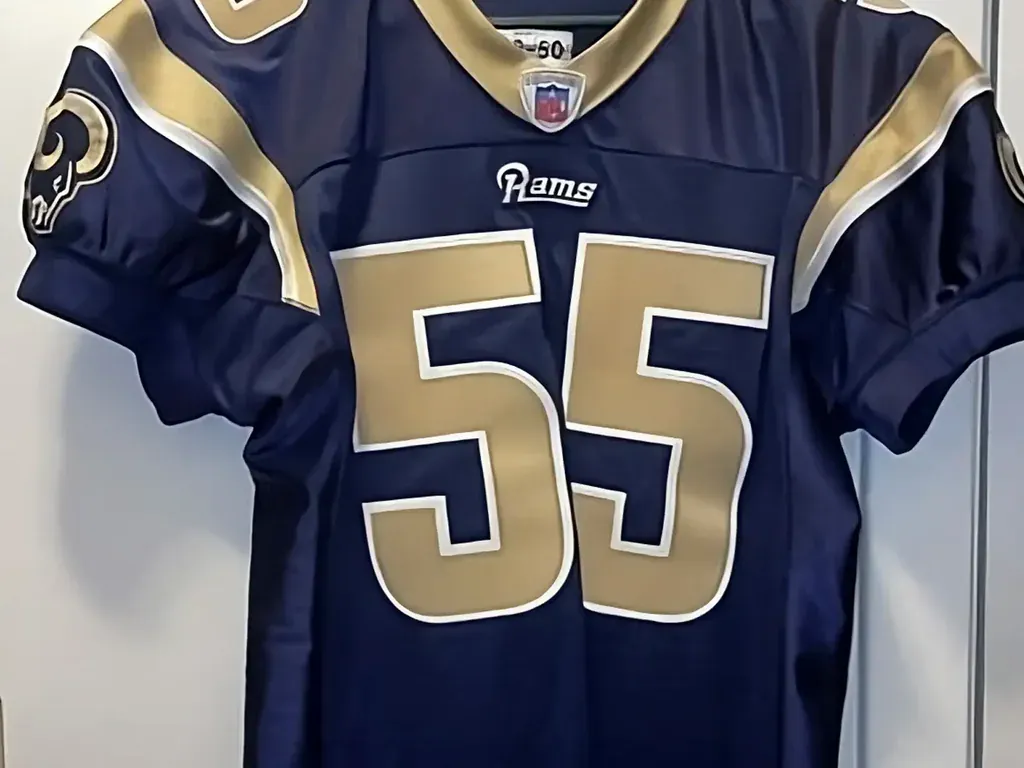
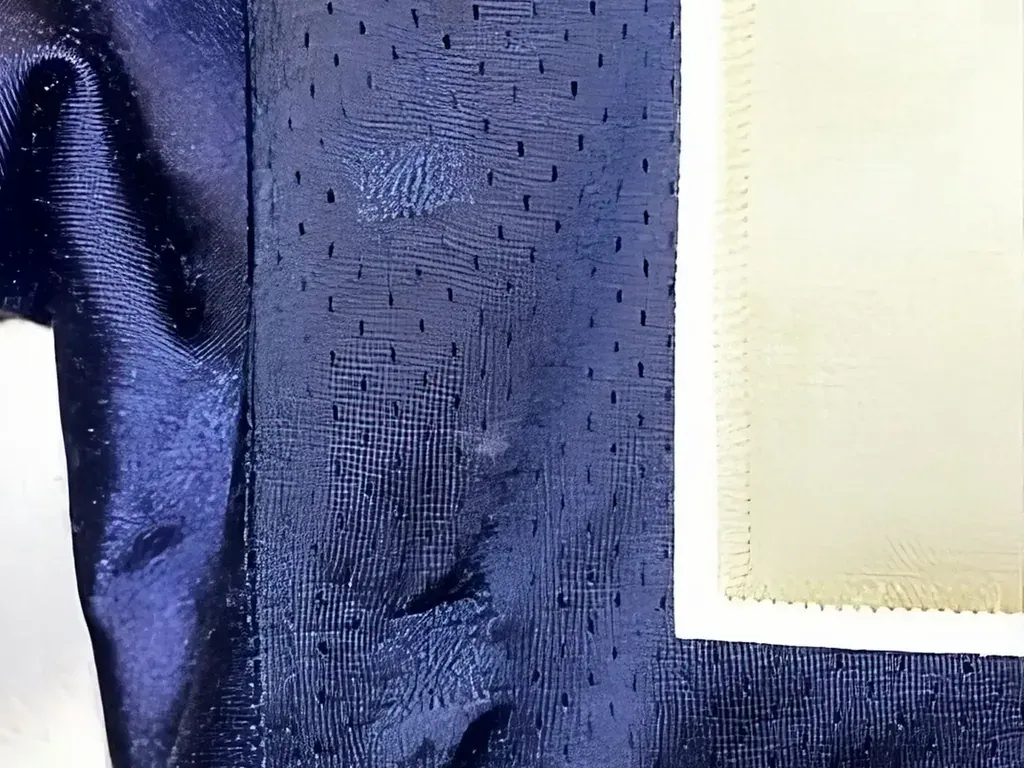
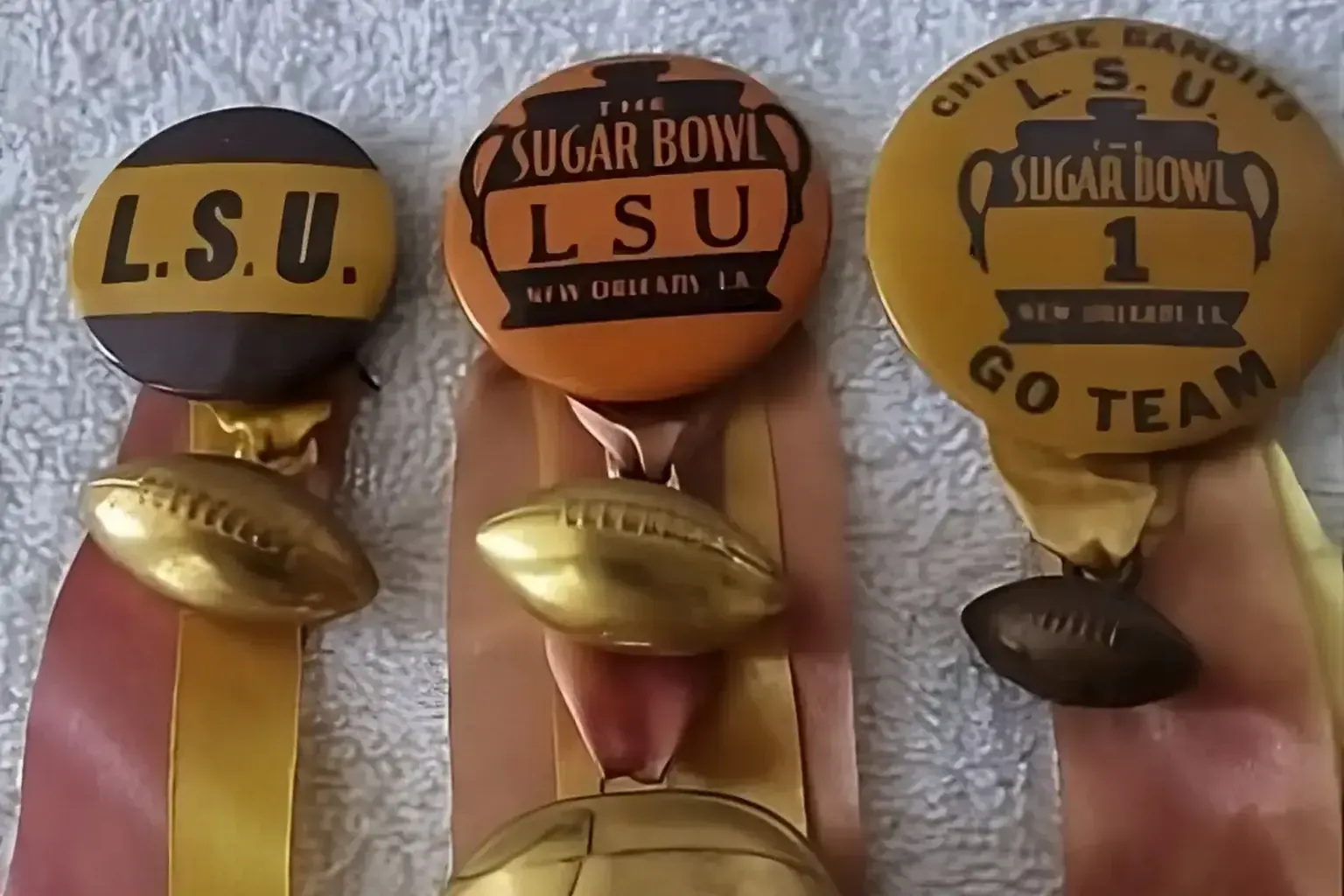
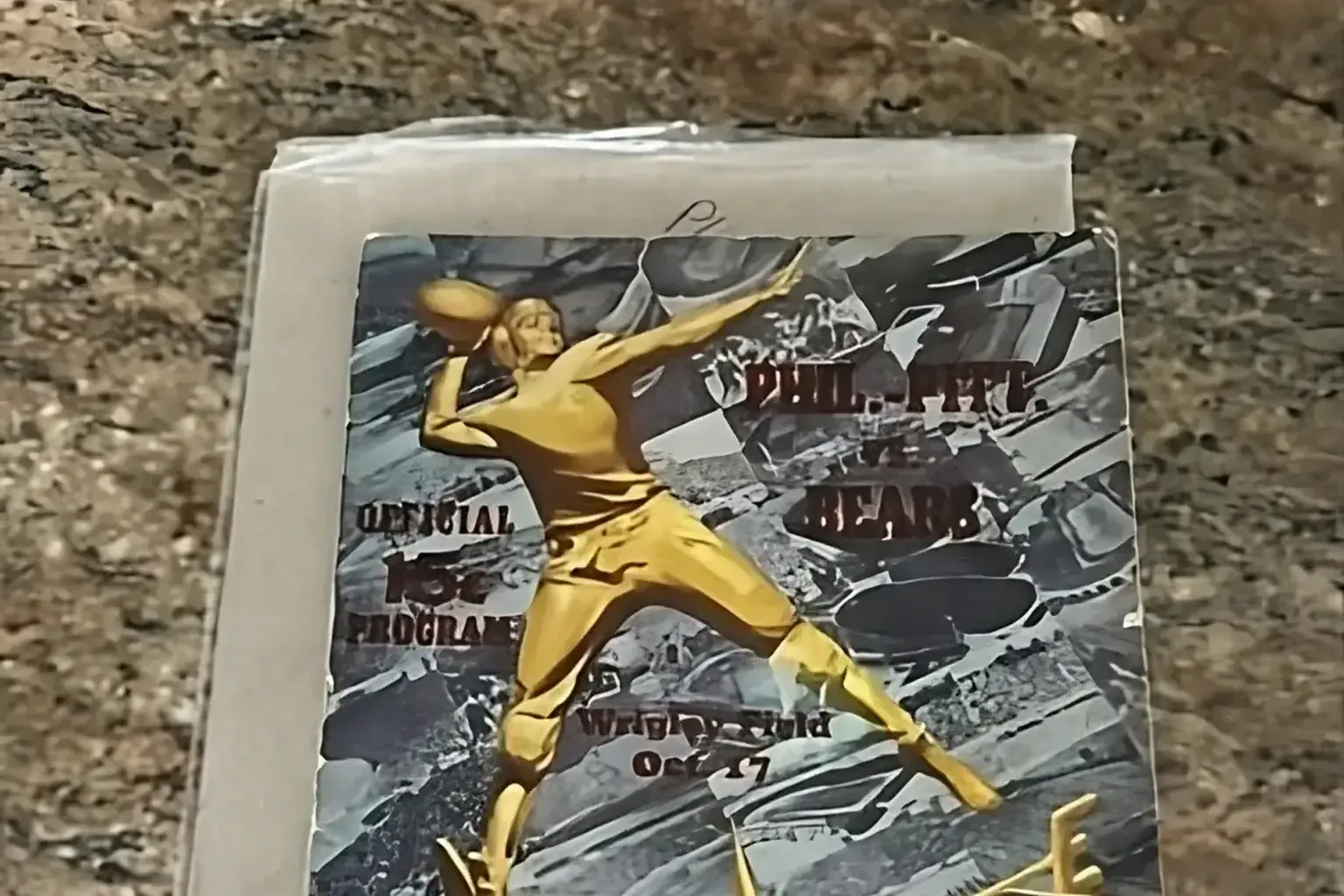
Pennant value is significantly shaped by manufacturer and production volume. Wincraft pennant stock dominates the 1960s-80s landscape; a Wincraft manufacturer tag stitched into the seam is a reliable marker of the production era. Trench Mfg (Trench Manufacturing) pennants also appeared during overlapping decades and carry their own collector recognition. Maker marks—embroidered labels or printed sleeves—are the primary evidence of attribution.
Game-day programs from baseball, football, basketball, and hockey events represent distinct sub-categories, each graded separately from pennant inventory. We assess condition based on cover gloss retention, spine wear, page integrity, and whether inserts—ticket stubs, player rosters, parking maps—remain complete.
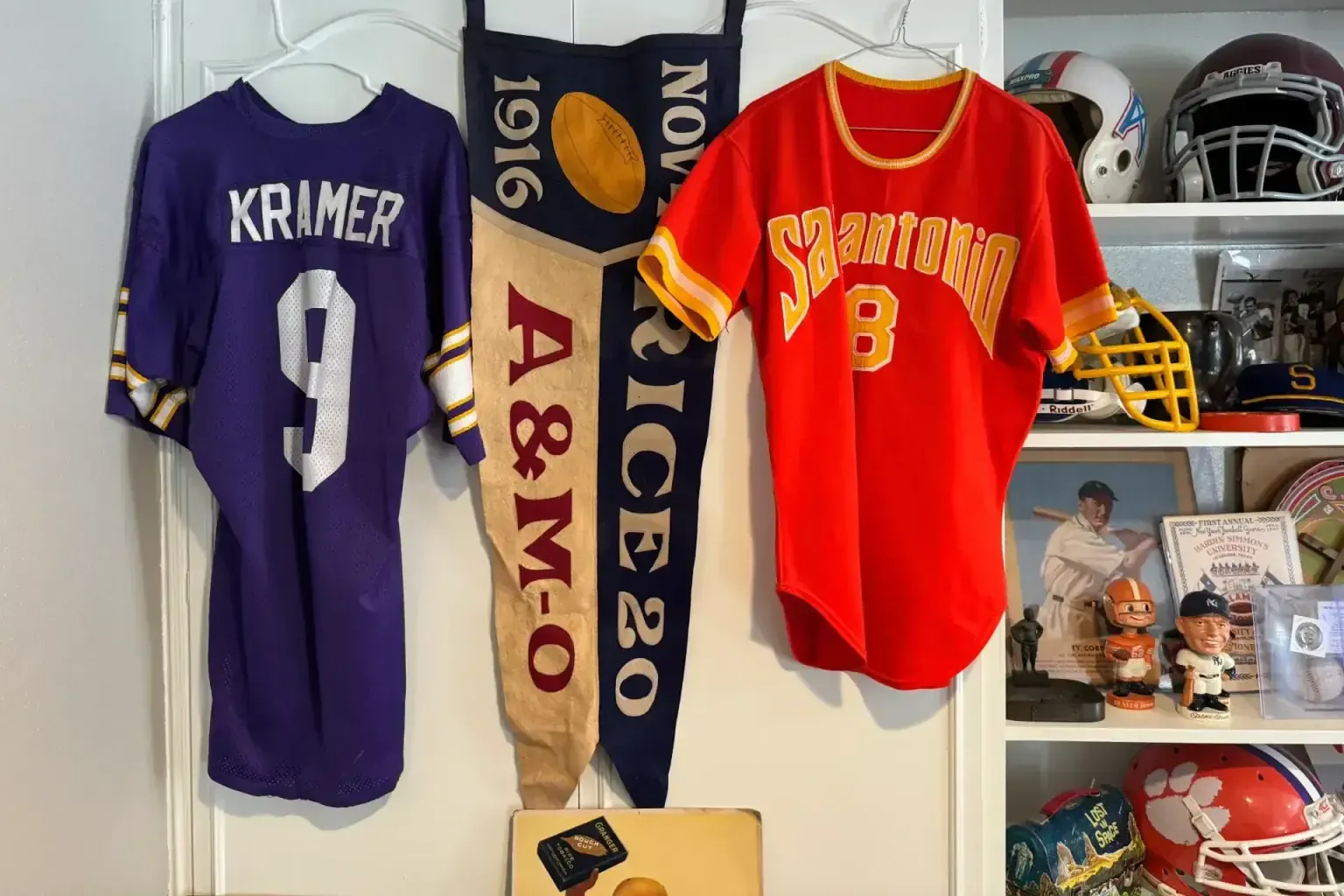
Felt pennant construction shifted over decades. Through the 1950s and into the 1960s, manufacturers favored wool-blend felt, which had a softer nap and aged with a characteristic patina. Canvas pennant variants appeared for heavy-duty or outdoor display. By the 1970s-80s, synthetic felt blends became the industry standard, offering brighter colors, lower production cost, and easier machine stitching.
Safe packing is essential. Lay pennants flat or loosely roll them around a tube; never fold them tightly, as permanent creases reduce grade and resale value. Use a rigid mailer with internal padding to prevent shifting during transit. If a framed pennant display is original to the piece and adds historical value, keep it intact. If the frame is a modern addition, removing the pennant before packing is acceptable.
Reproductions flood the market. Most modern fakes are screen-printed polyester with crisp edges and uniform color saturation that real vintage pennants do not have. Authentic felt pennants from the 1940s through 1970s show uneven dye absorption, loose or missing embroidered letters, and a specific weight in the hand—genuine felt is dense and supple, not stiff. We examine the back side first: authentic pennants have hand-stitched seams or industrial lock-stitch that varies slightly; reproductions have perfectly consistent machine overlock with no variation. Thread color, weave pattern, and the way the felt body was attached to the pennant stick all tell the story of when and where a pennant was made.
Pennant preservation and framing begins with proper storage. Do not expose pennants to direct sunlight, which fades the felt and loosens dyes within months. Store in acid-free boxes, never plastic bins—plastic traps humidity and accelerates mold. The ideal storage environment in San Antonio means accounting for heat and humidity: keep pennants in a cool, dry space away from basements and attics where temperature swings are extreme. Felt versus wool versus synthetic identification matters for long-term care. Wool pennants (rare, mostly pre-1930s) require moth protection and lower humidity; felt (the standard from the 1940s onward) needs protection from dust and direct light; synthetic polyester pennants (post-1980s) are more stable but still degrade under UV exposure. Before you frame, have any pennant professionally cleaned by someone who understands textile conservation—home cleaning with water or solvents risks bleeding the dyes or shrinking the felt.
Cleaning and storage best practices come down to minimal intervention. Do not wash, scrub, or spot-treat felt pennants yourself. Dust gently with a soft brush if needed, then store flat or loosely rolled around an acid-free tube. If framing, use UV-protective glass, acid-free backing, and mounting techniques that do not pin or glue the felt directly. The felt should hang freely inside the frame. Ensure the frame itself is made from materials that will not off-gas or transfer acid to the pennant over time. Sports memorabilia collecting at this level requires patience: the best pennants improve with proper storage, not with handling or attempts at restoration.
Jons Stats purchases individual pennants and entire collections from local sellers who have inherited or decided to downsize their sports memorabilia.
We purchase MLB baseball pennant stock from teams that still exist and from franchises that relocated or folded decades ago.
Condition for vintage pennants is judged on a four-tier scale: mint, excellent, good, and worn. Mint describes an unused deadstock pennant with original fold lines but zero display wear, no…
College and university pennant demand peaks for stock tied to specific championship seasons, notable athletes, or programs that have since relocated or dissolved.
Pennant value is significantly shaped by manufacturer and production volume. Wincraft pennant stock dominates the 1960s-80s landscape; a Wincraft manufacturer tag stitched into the seam is…
Game-day programs from baseball, football, basketball, and hockey events represent distinct sub-categories, each graded separately from pennant inventory.
Why homeowners call us
The person who looks at what you have is the person who makes the offer and pays for it. No call centre, no consignment queue, no waiting on a decision from somewhere else.
Offers are based on recent comparable sales and the condition of the item in front of us, and we will show you both. If something is worth more elsewhere, we will say so.
Send photographs, get a quote, then post the item or arrange to meet. Nothing is committed until you accept the number.
Sellers around San Antonio can be seen in person, and anyone further out can post items in with tracking and insurance.
FAQ
Vintage pennant values range from $15 to $500+ depending on age, team, rarity, and condition. Defunct-league stock (WHA, NASL, ABA) and world series commemorative pennants typically command $100–$350. Common team pennants from active franchises in good condition fetch $20–$80. Mint deadstock or rare production runs can exceed $300. Condition and authenticity are the largest price drivers.
We buy pennants in all conditions from worn to mint. Worn pennants with fading, pinholes, and fraying still have value—we simply offer accordingly. Good or excellent condition pennants receive higher offers. Structural integrity matters more than cosmetic wear; we avoid pennants with missing sections, major stains, or detached bunting that cannot be assessed fairly.
Yes. We purchase game-day programs, championship programs, and all-star game pennant-related programs in any condition where pages are present and the spine is sound. Programs missing entire sections or with significant water damage grade lower but are still evaluated for purchase.
Examine the felt texture and color consistency. Authentic vintage felt shows hand-finish irregularities, softer naps (wool blends), and era-appropriate dye aging. Modern reissues use bright synthetic felt, pristine machine stitching, and crisper graphics. Check for a manufacturer tag; authentic Wincraft pennant or Trench Mfg marks help date pieces. Photos sent to us are reviewed before we make an offer.
Yes. WHA hockey, NASL soccer, and ABA basketball pennants are rarer because those leagues folded decades ago. Fewer survive in circulation, making them inherently scarcer than stock from active franchises. Value is higher per piece and demand is steady among collectors of 1970s sports memorabilia and historical ephemera.
Email or text clear photos of the front, back, and any manufacturer tags. We provide a written offer or phone discussion. Accept the offer, and either drop off items locally or ship them for verification. Once condition is confirmed, payment is issued immediately—no waiting, no consignment, no auction fees.
Call 726-237-8297 or send photographs and we will come back with a number.